The Deyson Story

A Legacy in Bronze.
One Discipline to Shape It.

Deyson is a family brand built on a conviction held across generations: that the finest instruments are forged at the intersection of ancient craft and modern precision. Our acoustic engineering discipline meets a bronze-working tradition tracing to the 1750s — over 270 years of mastery, predating the modern percussion industry entirely.

1750Bronze Craft Origins
1987Production Founded
270+Years of Mastery

Forged by Tradition.
Engineered for Sound.

Before the modern drum kit. Before the recording studio. Before the global music industry took shape — there were bronze masters working in an ancient tradition, casting instruments for ceremony, for ritual, for sound itself. To bring the Deyson vision to physical form, we sought out artisans who trace their bronze-casting lineage to the mid-1700s. When their foundry formalized precision production in 1987, it brought centuries of artisan knowledge into a structured manufacturing environment — without surrendering a single generation of accumulated craft. They hold the raw, tactile knowledge required to work the metal. We provide the science required to tame it.

As a family, the Deyson contribution to this instrument was never pouring the bronze — it is the acoustics. We spent decades immersed in acoustic engineering research: studying how alloy composition shapes tonal character, how resonance decay defines sustain, and how harmonic spread governs the way an instrument sits in a mix. That discipline — built in laboratories and performance environments, not on the foundry floor — became the specification architecture behind every Deyson instrument.

We entrust these exacting blueprints to master founders whose lineage spans generations. When our acoustic architecture is executed by hands that have been shaping bronze since long before the percussion industry existed, the result is a different category of instrument entirely: one designed from the frequency up.

Our decision was deliberate: to engineer these instruments under our family name, taking absolute accountability for the alloys, the specifications, and the final acoustic standards. By overseeing the quality from alloy verification through to final acoustic benchmarking, and delivering directly to the musician, we ensure that your investment goes entirely into the instrument's sound — not into a supply chain.
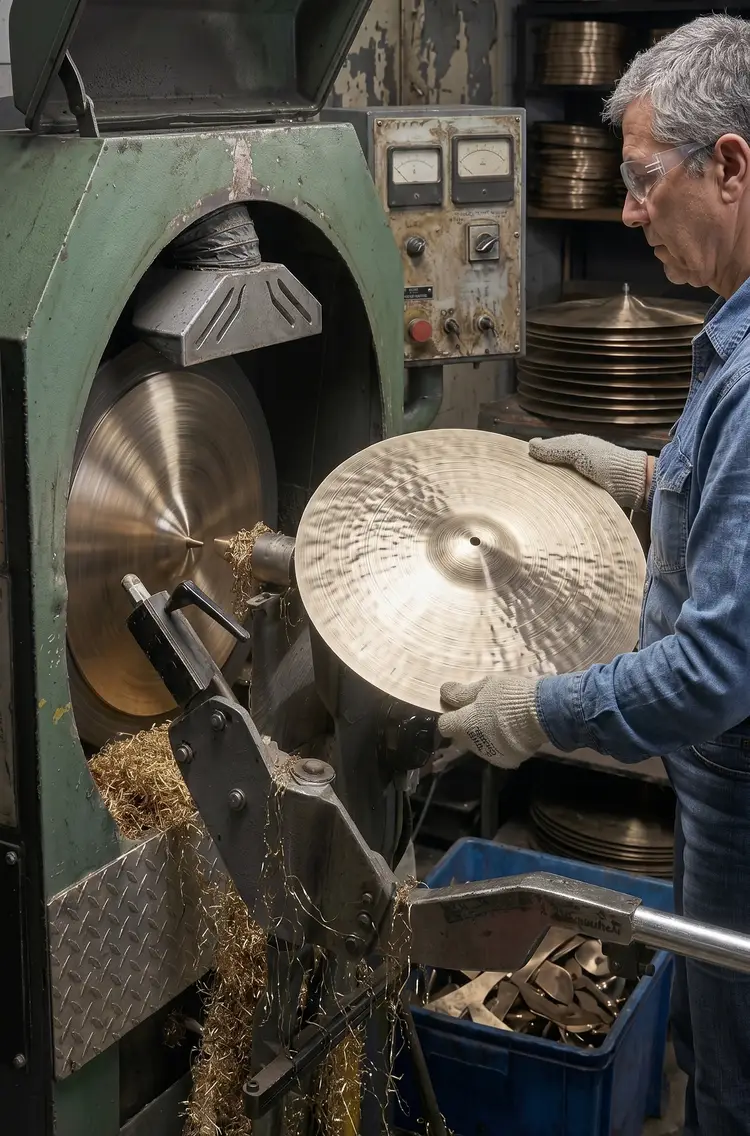
Deyson production process — precision acoustic manufacturing

From Specification
to Stage.

A look at the key stages behind every Deyson instrument — from raw alloy to finished, acoustically certified cymbal.

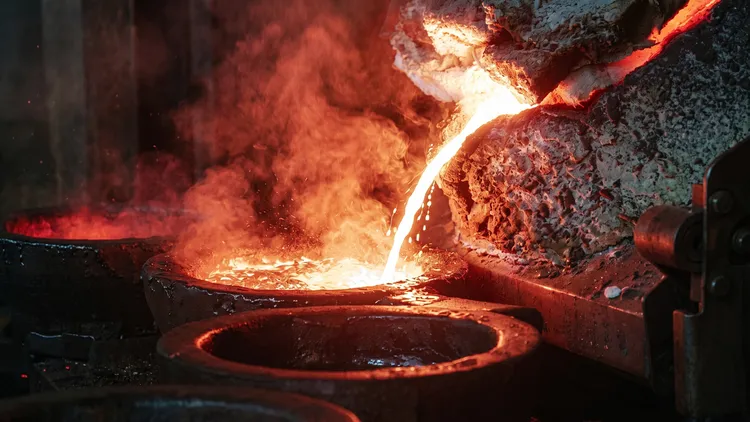
Molten bronze alloy being poured into cymbal molds
01

Alloy Casting

Molten bronze alloy is poured into precision molds, forming the raw disc blank. Alloy composition is batch-verified before each cast to ensure material consistency across every pouring phase. This foundational stage determines the mass, density, and resonant character that carries through every subsequent step of the instrument's creation.

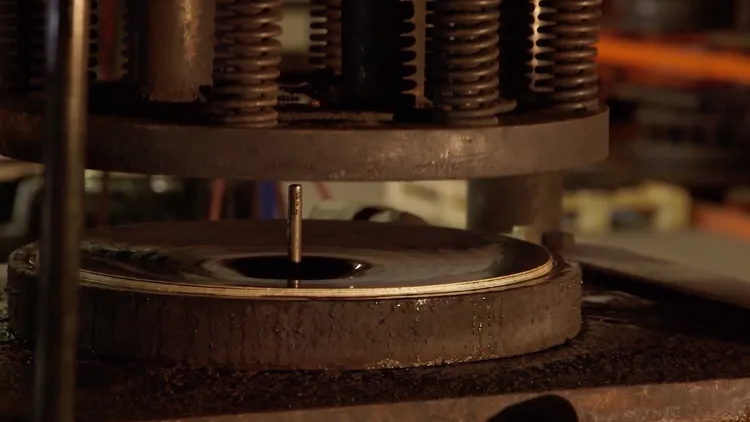
Hydraulic press forming the cymbal dome and bell
02

Press Forming

The heated bronze blank is shaped under hydraulic pressure to exact dimensional tolerances, establishing the foundational acoustic profile of the bell and bow. This critical precision forming ensures the physical geometry perfectly matches our acoustic architecture, delivering the strict tonal consistency and harmonic response our specifications demand.

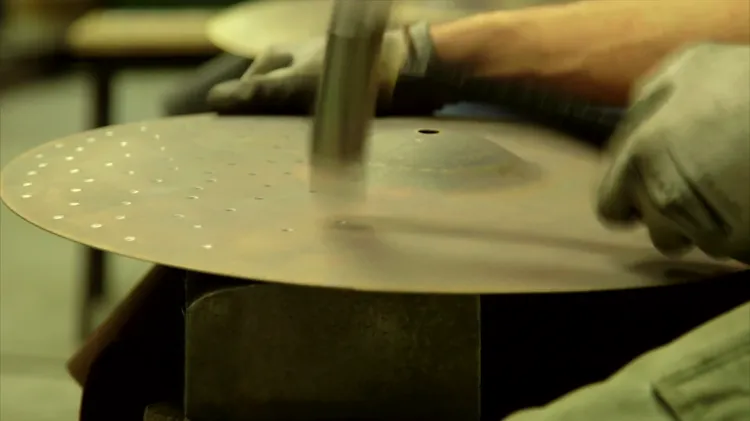
Craftsman hand hammering a cymbal bow
03

Hand Hammering

On handcrafted cymbal lines, skilled craftsmen hand-hammer the bow to work-harden the metal and manually voice the instrument. Each blow builds surface tension governing attack, spread, and overtone character — a process that may be revisited after lathing on select models to refine tonal response.

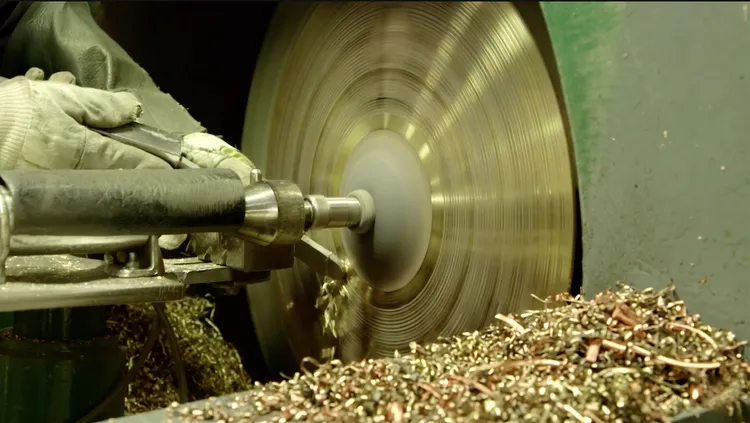
Cymbal being turned on a lathe to cut tonal grooves
04

Lathing

The cymbal is mounted on a lathe and turned by hand tool, cutting the tonal grooves that govern frequency response, projection, and decay. Groove depth and spacing follow acoustic specification — every cut is deliberate. On certain models, a final hammering pass follows lathing to complete the voicing.

Instruments That Serve
the Musician.

Generations of bronze mastery in the foundry. Decades of acoustic engineering discipline in the laboratory. And the humbling responsibility of building instruments that professionals stake their performances on — all led us to one enduring truth: instruments should serve the musician. Everything else is noise.

01

Performance Consistency

No two bronze cymbals sound identical — that's the nature of the material. What Deyson controls is character: the same voicing profile, the same tonal range, the same response behavior — every production run.

02

Practical Design

Every decision — from alloy selection to surface treatment — is guided by real-world performance requirements. No features added for marketing. No specifications cut for cost.

03

Build Quality That Holds

Deyson instruments are built for repeated use, regular transport, and demanding performance conditions. Structural reliability is not an afterthought — it is part of the specification.

Ready to Find Your Sound?

Explore the
Full Instrument Range.